The offer call is the moment most people decide not to negotiate. A 2025 Resume Genius survey of 1,000 full-time US workers found that 55% didn't negotiate their first salary. Of those who did, 78% got a better offer.
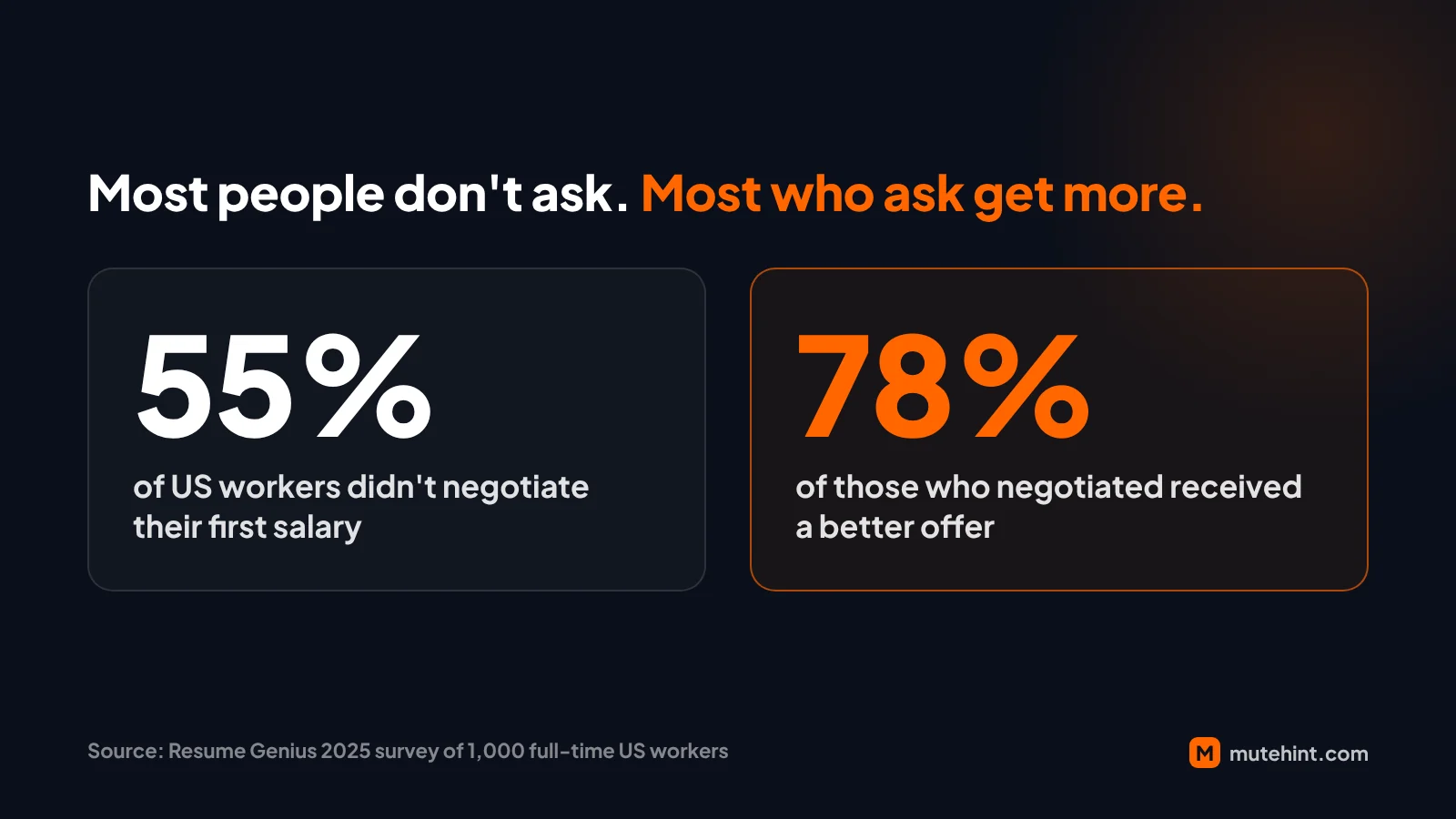 Most people don't ask, and most who ask get more. Source: Resume Genius, 2025.
Asking is rarely the hard part to understand. It's the hard part to do, especially live, on a video call, with the recruiter watching your face. This guide covers what to say, word for word, and how to handle the moments in between.
Before the call: decide three numbers
Don't go into the call with one number. Go in with three:
- Your target: the salary you'd be genuinely pleased with, based on what the role pays at similar companies in your area.
- Your opening ask: a little above your target, so that meeting in the middle still lands near it.
- Your walk-away point: the lowest offer you'd accept. Decide this before the call. Under pressure, people agree to numbers they'd never have chosen calmly.
Write them down and keep them in sight during the call. If you research only one thing, research what the role pays: salary sites, job posts that list pay ranges, and people in similar jobs you can ask.
When they ask for your expectations
Recruiters often ask this before making an offer. You don't have to give the first number, but stonewalling can come across as evasive. A middle path:
"I'm focused on finding the right fit, and I'm sure we can agree on a fair number. What range do you have budgeted for the role?"
If they insist, give a researched range with your target near the bottom:
"Based on what similar roles pay, I'm looking at something in the range of 95 to 105 thousand."
When the offer comes in
Whatever the number, don't accept or decline on the spot. Start with thanks, then ask for time or ask the question:
"Thank you, I'm really excited about this role. Is there any flexibility on the base salary?"
Then stop talking. The silence will feel long, maybe five seconds. Let it be. The person who fills it usually gives something away.
If you'd like to make a specific ask:
"Based on the scope of the role and what I've seen for similar positions, I was hoping for something closer to 105. Is that something we could get to?"
Notice what's missing: an apology, a long justification, a list of your personal expenses. Keep the case about the role and the market.
When they say the salary is fixed
Salary is often the least flexible part of an offer. Other things often aren't:
- Sign-on bonus: a one-off payment is easier to approve than a higher salary.
- Start date: extra time between jobs costs the company little.
- Review timing: "Could we agree on a salary review at six months instead of twelve?"
- Remote days, training budget, equipment, extra leave.
"I understand the base is set. Could we look at a sign-on bonus to close the gap?"
Why video makes it harder, and how to handle that
On a video call you can see their face, and they can see yours. That makes the pauses feel longer, and every hesitation shows. Three things help:
- Keep your numbers and your first lines where you can see them: a note next to the camera, so your eyes stay near the lens.
- Practice the key sentences out loud beforehand. Saying "Is there any flexibility on the base salary?" ten times in your room makes it far easier to say once on the call.
- Use the pause on purpose. Look at the camera, not away, and wait.
Some people also keep a live assistant on screen for calls like this. MuteHint's Negotiation profile listens to the call and, when the other side pushes, shows a short, measured reply on your own screen, built from the numbers and notes you paste in before the call. It's a desktop app that doesn't join the call, and only you see it.
After the call
Ask for the final offer in writing before you accept, and check that everything you agreed is in it: salary, bonus, start date, review date. A friendly email confirming what you discussed is normal and professional.
Then accept with enthusiasm. A negotiation done well shouldn't sour the relationship. Most employers expect it, and respect people who ask clearly and politely.